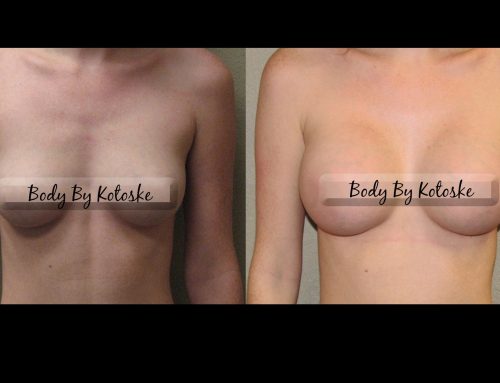
Choosing breast enhancement is about more than adding volume. It is about finding a balanced approach to shape, size, and proportion based on your body, goals, and anatomy. At Body By Kotoske in Phoenix, AZ, each enhancement plan begins with a consultation to better understand your frame, existing breast tissue, lifestyle, and the look you want to discuss.
This guide explains key decisions involved in breast enhancement, including implant type, implant shape, placement, incision options, recovery expectations, and questions to ask during your consultation.
What Influences Your Ideal Shape and Volume
No two patients have the same anatomy or goals. Chest wall width, existing breast tissue, skin elasticity, body frame, and prior changes from weight fluctuation, pregnancy, or aging can all affect which approach may be appropriate.
Someone with a narrow chest and minimal natural tissue may need a different plan than someone with more existing fullness or looser skin. Lifestyle can also matter. Patients who run, swim, lift weights, or stay highly active may prefer a more moderate profile, while others may want to discuss a fuller silhouette.
At Body By Kotoske, these factors are reviewed during the consultation so the treatment plan can be designed around your body, goals, and long-term expectations.
Choosing Between Implant Types
The implant you choose can affect how the breasts look and feel after surgery. This decision usually involves two main considerations: the implant filling material and the implant shape.
Silicone vs. Saline Implants
Silicone implants are filled with cohesive silicone gel and are often chosen by patients who want a softer feel that may more closely resemble natural breast tissue. Saline implants are filled with sterile saltwater after placement, which may allow for a smaller incision because the implant is inserted empty and then filled once positioned.
Saline implant ruptures are usually easier to notice because the body absorbs the saline and the breast size changes. Silicone implant ruptures may be less obvious, which is why patients with silicone implants may be advised to have periodic imaging to help monitor implant integrity.
Both silicone and saline options include FDA-approved implant choices, but each option has benefits, risks, and maintenance considerations. The right choice depends on your anatomy, goals, feel preference, incision considerations, and long-term monitoring needs.

Implant Shape: Round vs. Anatomical
Round implants provide fullness across the breast and may create more upper-breast volume. Anatomical implants, sometimes called teardrop implants, are designed with more fullness toward the lower portion of the implant, which may support a more gradual breast contour for some patients.
Patients who want more visible fullness may prefer round implants, while those who want a softer slope may ask about anatomical options. Dr. Kotoske can help review these choices based on your existing tissue, body proportions, and the look you want to discuss.
Getting the Size Right
Size is often one of the biggest questions patients have before breast enhancement. Cup size alone is not a reliable way to choose implant volume because bra sizing varies by brand and does not fully account for torso width, chest shape, or existing breast tissue.
Surgeons usually measure implant volume in cubic centimeters, or ccs, because this gives a more precise way to compare implant sizes. During your consultation, sizers or visual aids may be used to help you understand how different volumes may look with your frame.
The goal is to choose a size that feels proportionate to your body and supports your desired look, rather than relying on a generic chart or cup size alone.
Placement and Technique Options
Implant placement and incision location can affect the final appearance, recovery process, and long-term care needs. Your surgeon will review these options based on your anatomy, implant choice, and goals.
Submuscular vs. Subglandular Placement
Submuscular placement positions the implant beneath the chest muscle. This option may help create a softer upper-breast slope and reduce the visibility of implant edges, especially in patients with thinner skin or less natural breast tissue.
Subglandular placement positions the implant above the muscle and beneath the breast tissue. This option may be considered for patients who already have enough natural tissue to provide coverage and who may be seeking a different recovery experience.
Submuscular placement may also be discussed in relation to long-term breast imaging. Your surgeon can explain how placement may affect mammogram visibility and ongoing breast health monitoring.
Incision Location Options
One common incision location is the inframammary fold, which is the natural crease beneath the breast. This placement gives the surgeon direct access and allows the scar to sit in a less visible area.
Another option is the periareolar incision, which is made around the edge of the areola. The natural change in skin color around this area may help make the scar less noticeable for some patients.
The right incision location depends on implant type, implant size, anatomy, and surgical planning. Dr. Kotoske can walk you through these options during your consultation so you understand what may be appropriate for your case.
Combining Enhancement with a Lift
For some patients, added volume alone may not create the look they want. Pregnancy, breastfeeding, weight changes, and aging can affect skin elasticity and breast position. In these cases, an implant by itself may not address breast sagging or the position of the nipple and areola.
Combining breast enhancement with a lift, also known as mastopexy, may be discussed when a patient wants both added volume and a more lifted-looking breast position. A breast lift can help reposition breast tissue, while implants can help restore or add volume.
Patients considering this combined approach can review the mastopexy and breast lift information on the Body By Kotoske website or ask about it during a consultation.
What Recovery and Results Timeline May Look Like
Recovery from breast enhancement varies from patient to patient. The first week often includes rest, limited upper-body movement, swelling, and mild to moderate discomfort that may be managed with medication as directed by the surgeon.
Many patients return to light daily activities within one to two weeks, depending on their healing progress and the type of work or routine they have. Strenuous exercise and heavy lifting are commonly restricted for several weeks, often around four to six weeks, but your exact timeline should be based on your surgeon’s instructions.
Swelling is common in the early stage of healing. Breast shape and implant position may continue to change over the following months as the implants settle and surrounding tissue relaxes. Many patients see continued changes for three to six months, though individual healing times can vary.
Questions to Ask During Your Consultation
A consultation is the best time to ask detailed questions about your options, expectations, risks, and recovery. You may want to ask about the surgeon’s credentials, experience with breast enhancement procedures, and the types of implants offered.
It can also be helpful to ask to see before and after photos of patients with a similar body type, since this may provide a more realistic reference point than general examples. You can also ask about possible complications, revision procedures, implant warranties, long-term monitoring, and what to expect during recovery.
At Body By Kotoske, consultation questions are welcomed so patients can better understand their options before making a decision.
Take the Next Step Toward Your Goals
Breast enhancement is a personal decision, and the right approach can look different for every patient. Implant type, size, shape, placement, incision location, and recovery expectations should all be reviewed carefully before surgery.
Dr. Kotoske and the team at Body By Kotoske in Phoenix, AZ take the time to understand each patient’s goals and discuss options that may support a balanced look based on their body and preferences.
If you are ready to explore breast enhancement options, schedule a consultation with Body By Kotoske to discuss your goals and learn what approach may be right for you.